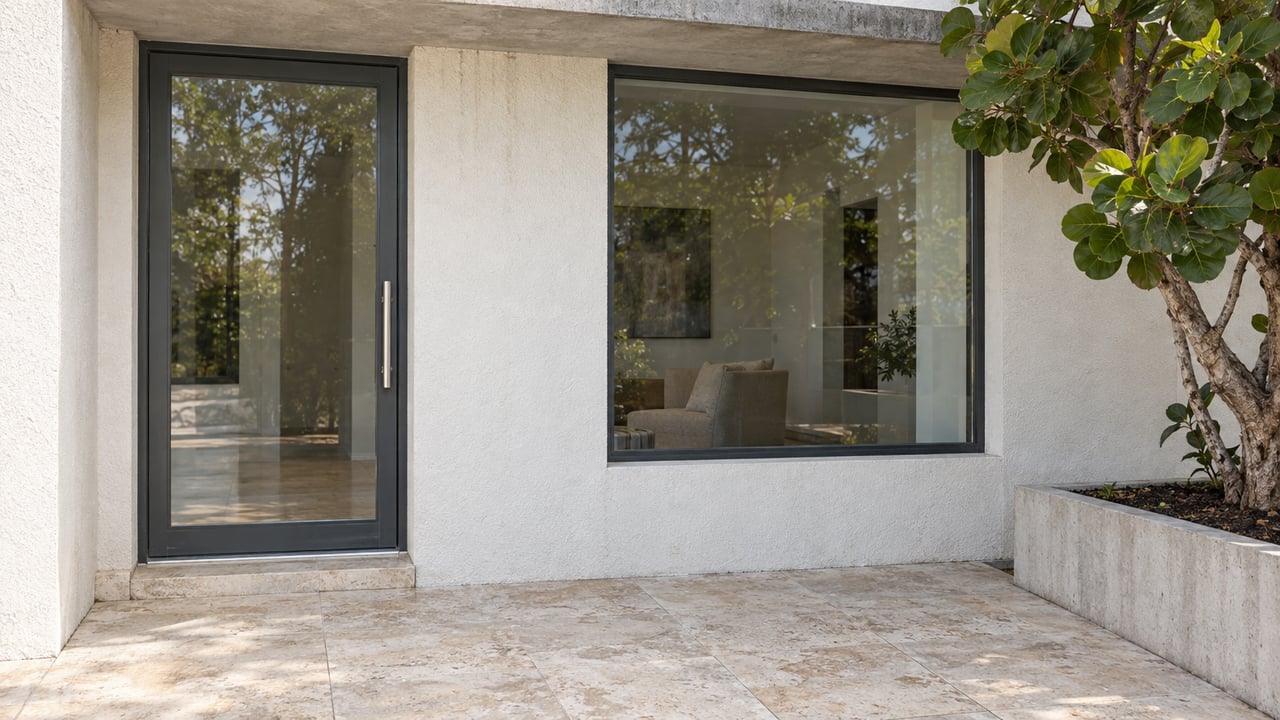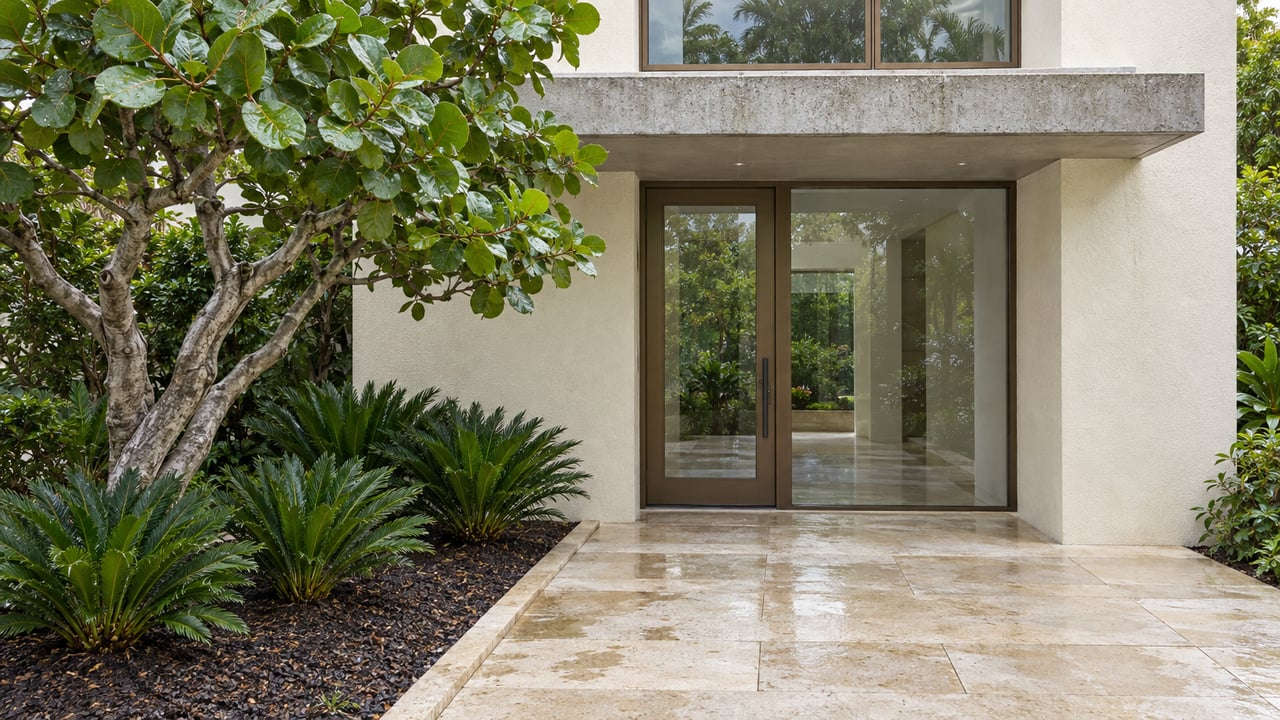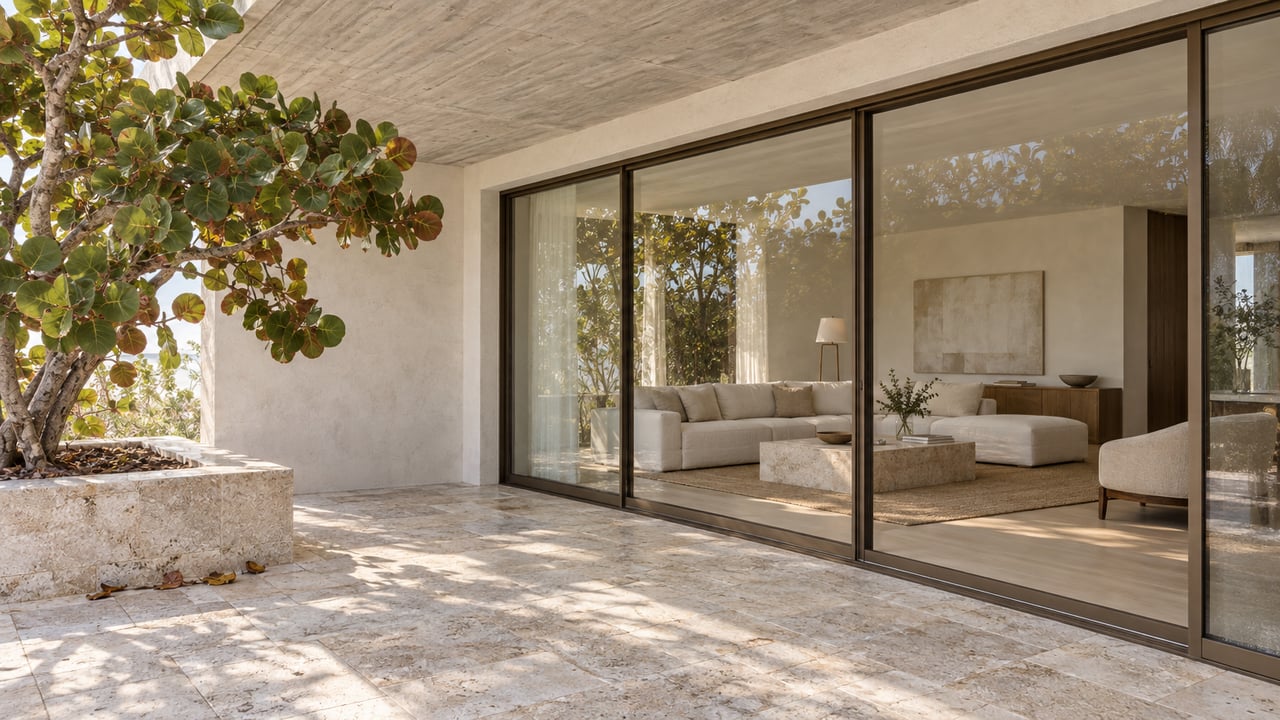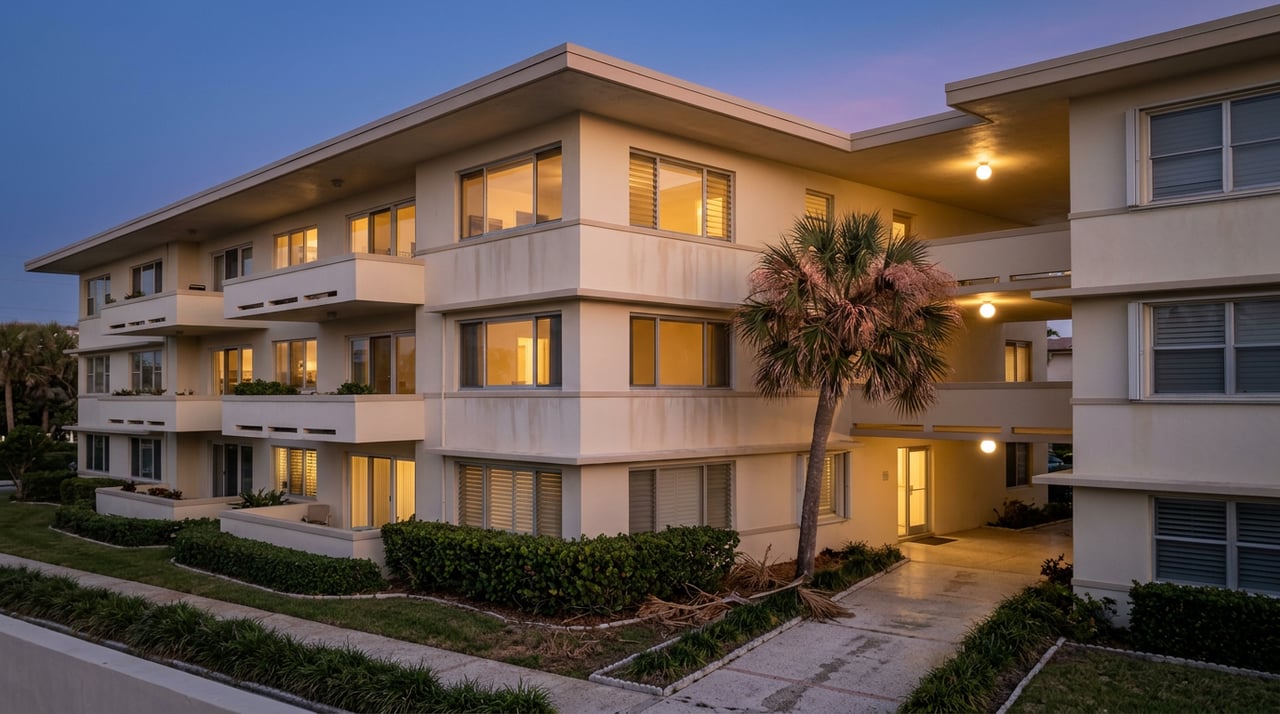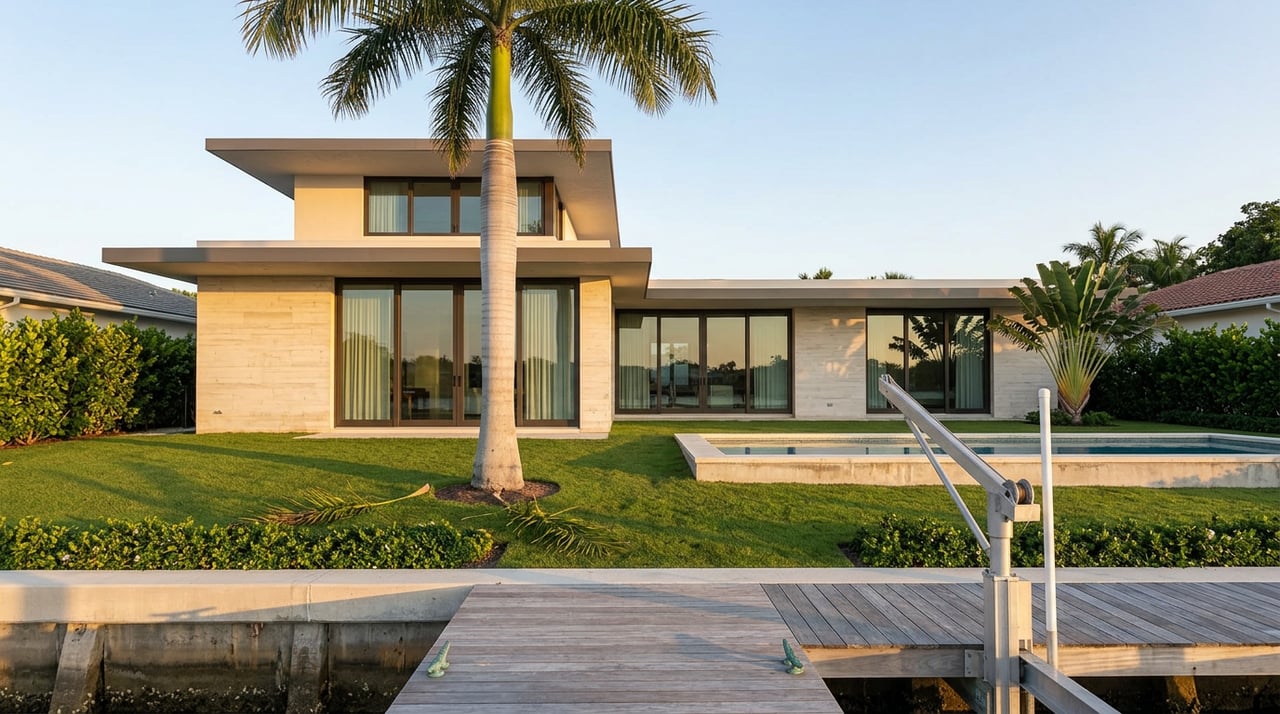
The Real Deal reported that in March 2025, a Florida LLC closed on a three-bedroom house at 1541 West 22nd Street, on Sunset Island IV, for $16 million. The house was built in 1941, sits on half an acre, and last changed hands in 1992 for $720,000. The buyers, a group led by residential agent Danny Hertzberg alongside Craig Dell and Cary Luskin of the investment firm 21st Century Property Group, have no plans to live in it. They are demolishing it to build a new spec home.
Run the math and the house itself barely registers. Over 33 years, the price moved from $720,000 to $16 million, and the structure that sat on the lot the entire time is coming down. Whatever accounts for that gap, it is not the house.
That gap is the story on Sunset Islands, and it is the thing a portal median cannot tell you.
What the Median Is Actually Measuring
Anyone shopping this enclave has already seen the headline numbers. Across the Miami Beaches overall, the median single-family sale price rose 77% year over year to $4.9 million in the second quarter of 2026, while the average climbed 35% to $8.3 million. Closings were up 37% year over year to 129 sales, the strongest second quarter in four years, and deals above $10 million nearly tripled from the year before.
Those figures describe a market getting hotter at the top. What they do not describe, and what a buyer needs to know before making an offer on Sunset Islands specifically, is that the number of transactions behind that median is small enough that a single deal can move it. Sunset Islands is a subset of an already-thin pool of Miami Beaches single-family sales, spread across a plat that has held roughly 250 homes total since the islands were dredged and platted in the 1920s. In a given quarter, the enclave might see one sale, or none. When it does see one, the price attached to that single trade becomes the neighborhood's entire data point for the period.
That is a different animal than a subdivision with 40 comparable closings a quarter, where outliers wash out. Here, the outlier is often the only observation you get.
Two Sales and a Listing, Same Plat, Different Structures
The clearest way to see the land-basis logic at work is to compare two recent Sunset Islands sales with an asking-price listing.
| Address | Price | What actually sold |
|---|---|---|
| 1541 W 22nd St (Sunset Island IV) | $16,000,000 | 1941-built house on a half-acre lot, purchased to demolish and rebuild |
| 1601 North View Drive | $21,000,000 | Waterfront teardown, immediately re-listed for rent at $30,000/month while redevelopment plans move forward |
| 1400-1420 W 23rd St (Sunset Estates, Sunset Islands III) | $110,000,000 (asking) | Two newly completed residences across roughly 32,000 square feet with 187 feet of combined water frontage, listed by Ana Teresa Rodriguez of Coldwell Banker Realty |
The two sale prices have almost nothing to do with the houses standing on the lots. The third figure is an asking price for two newly completed residences. Put them together and the pattern is not that Sunset Islands homes are expensive. It is that the enclave prices land and water access first, and treats the house as either an asset to be maximized or an obstacle to be removed, with very little middle ground.
The developer who paid $21 million for the North View Drive property did not pause to weigh curb appeal. The existing structure was re-listed for rent at $30,000 a month while permits move through the pipeline, leaving it as a potential rental placeholder on top of the land position.
The Gate Is a Supply Mechanism, Not Just a Security Feature
Sunset Islands has two points of entry. The northern islands, I and II, are reached through a manned gate off 29th Street. The southern islands, III and IV, sit behind a separate gate off 20th Street and Sunset Drive. Both are staffed, both control who drives in, and both have the practical effect of keeping the total number of parcels on the market at any moment small.
That matters for underwriting. A century-old plat with a fixed number of lots, subdivided into private, gated clusters, cannot expand inventory in response to demand the way a growing suburb can. When demand for waterfront land rises, as it clearly has, the enclave cannot build its way to more supply. It can only reprice the existing lots, tear down what is on them, and build again. The gate does not create that dynamic on its own, but it reinforces it by keeping the parcel count fixed and the transaction pace slow enough that comparables stay scarce.
Investment Activity on Sunset Islands and Nearby
One sign of substantial investment activity on Sunset Islands is reporting that former Google CEO Eric Schmidt has spent roughly $114 million assembling waterfront and teardown properties across the islands since 2020. Those reported acquisitions put waterfront parcels and teardowns at the center of this example.
The same logic shows up one bridge away on North Bay Road, where David and Victoria Beckham closed on a $72 million purchase and developer Todd Glaser went under contract on a 2.3-acre estate for $105 million, both within the same recent stretch of Miami Beach's barrier-island market. None of these are Sunset Islands transactions specifically, but they confirm the pattern is not confined to one plat. Across this stretch of bay-facing land, price is tracking frontage feet and buildable lot size well before it tracks the age or condition of whatever happens to be built on the parcel today.
What This Means If You're Actually Underwriting a Purchase Here
If you are comparing Sunset Islands against another waterfront enclave on the strength of a median sale price you found online, that comparison is on shakier ground than it looks. The number you are reading might represent one $16 million land deal, one $110 million compound listing, or nothing at all for the quarter. None of those tell you what a specific lot with 80 feet of frontage and open bay access, versus a smaller interior lot with none, is actually worth.
The more useful exercise is a frontage-and-lot analysis against the handful of recent trades on that island specifically, not a headline average pulled from the wider Miami Beaches market. On premium waterfront parcels, budget for the land basis plus construction cost plus carrying costs, and treat the existing house as a placeholder unless it was built recently enough to hold its own value. On interior, non-waterfront lots, the math shifts since there is no dock premium to underwrite, though the same scarcity from the gated, fixed-plat structure still applies. Either way, insurance and property tax carrying costs on waterfront lots in this price band are real enough to model before you write an offer, not after.
A Few Questions Worth Settling Before You Look
Are there condos on Sunset Islands? No. The four islands are entirely single-family, with a mix of waterfront estates and interior lots.
How many homes are actually on the islands? Roughly 250 total, spread across Sunset Islands I through IV, which is part of why any given quarter produces so few comparable sales.
Does the guard gate affect how a sale actually closes? It does not change the closing process itself, but it does mean showings, inspections, and even casual drive-bys require coordination with the gate, which is one more reason serious buyers here tend to work with someone who already has a relationship with the community.
If you are trying to figure out what a specific Sunset Islands lot is actually worth once you strip away the headline median, that is exactly the kind of analysis 1 Nation Realty does before any offer goes in. Request a private consultation with Todd Nation and the team when you are ready to look at the frontage, the lot, and the real comps, not just the number a portal handed you.