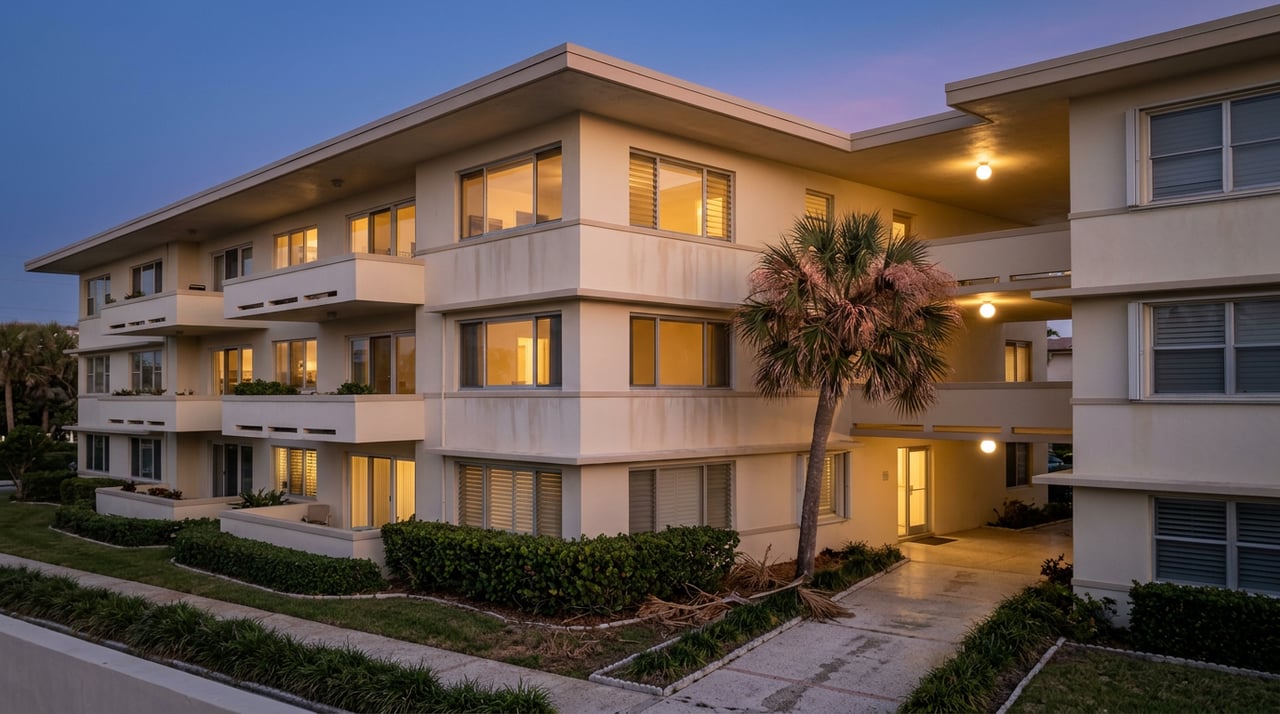
Surfside has not quite 6,000 residents, one north-south spine split between Harding and Collins Avenue, and a municipal budget sized for a town you could walk end to end in twenty minutes. On paper, that is not a place that runs its own literary festival or keeps a monthly block party alive for eighteen years. It does both. It also does not own the skate park its kids ride to on weekends. That park belongs to five cities at once, and Surfside is just one of them.
That split, what the town builds for itself and what it only gets by sharing, is the more interesting story about Surfside this fall than any single event on the calendar. Once you see the pattern, the rest of the season reads differently.
The Block Party That Predates Everything Else
Long before Surfside had a food scene worth mapping, it had Third Thursdays. The block party series has run monthly since 2008, which means it predates most of the restaurants currently drawing attention to Harding Avenue, predates the Four Seasons taking over The Surf Club, predates a meaningful chunk of the condo stock now for sale in town. It is the one recurring civic event Surfside has never needed a developer, a hotel brand, or a national chain to sustain.
The 2026 edition carries the theme "Cruising the Globe," run by the town's own Resort Tax Board rather than any private promoter. That distinction matters more than it sounds. A restaurant opening depends on a lease, a landlord, and a concept surviving its first eighteen months. A town-run block party depends on nothing but the town deciding to keep doing it, which is exactly why it has outlasted three real estate cycles already.
A Nobel Laureate Lived on This Grid
Here is the fact that does not fit the beach-town image at all: Isaac Bashevis Singer, the Nobel Prize winner in Literature, lived in Surfside. On Sunday, Nov. 16, the Surfside Community Center will host Singerfest, a gathering built around his life and work, timed to his birth month and pitched at readers, scholars, and neighbors who remember him as a former resident rather than a subject in an anthology.
It is worth sitting with how unusual that is. Most oceanfront towns this size measure their cultural cachet in restaurant reviews and hotel openings. Surfside is instead building a festival around a literary figure whose work has nothing to do with sand or skyline. That is not the kind of programming a tourism board invents to fill a slow month. It is the kind of programming a town builds when it has an actual claim to make and decides to make it.
Between Third Thursdays and Singerfest sits one more date worth putting on the calendar now rather than discovering later: a Hispanic Heritage Month celebration on Sunday, Oct. 11, part of the same fall run of town-organized gatherings rather than a one-off.
Here is the fall lineup as it currently stands:
- Third Thursdays, "Cruising the Globe" — monthly block party, Resort Tax Board, ongoing through the season
- Hispanic Heritage Month celebration — Sunday, Oct. 11
- Singerfest — Sunday, Nov. 16, at the Surfside Community Center, honoring Isaac Bashevis Singer
Summer Sundays, the beach series that ran through August with a Kites & Bites afternoon on the sand and a World Cup final watch party that drew residents and visitors out to the shoreline behind the Community Center, has wrapped for the year. Its exit clears the calendar for the fall run above rather than leaving a gap.
What the Town Built Alone, and What It Had to Share
Now the other half of the pattern. Surfside's primary park, 96th Street Park at 9580 Bay Drive, is entirely the town's own project: a multipurpose field, a playground, and a kayak launch that residents can use daily from 8 a.m. to sunset. So is the beachside fitness trail, eight outdoor workout stations strung along the hard path from 89th Street to 95th Street, built for a town where most people can walk to it.
Then there is Haulover Park's skate park and pump track, which Surfside did not and could not have built on its own. It exists because Surfside, Bal Harbour, Bay Harbor Islands, Miami Beach, and Sunny Isles Beach pooled resources into a single shared facility rather than each town trying to justify its own version. The Town of Surfside is upfront about the arrangement on its own parks page: the facility is not run by Surfside's Parks and Recreation Department at all. It answers to the five-city partnership that built it.
That is the tell. A town of under 6,000 residents can fund a playground, a field, and a kayak launch inside its own footprint without much debate. It cannot easily justify a skate park and pump track sized for real use, so it does not try. It borrows scale from its neighbors instead, the same way a household might split the cost of something none of them would buy alone but all of them will use constantly.
Why the Split Actually Works
The events side and the infrastructure side of Surfside's calendar are solving two different problems, and the town has quietly picked the right tool for each one.
Identity is cheap to build and expensive to fake. Third Thursdays, Singerfest, and the Hispanic Heritage Month gathering all cost the town relatively little to run, mostly staff time, a Community Center room, and a beach permit, and they buy something a bigger city with a bigger budget cannot simply purchase: eighteen years of continuity, a real literary connection, a calendar that feels like it belongs to the people who live here rather than to whoever is renting the storefront this quarter.
Physical infrastructure is the opposite problem. A skate park, a pump track, a facility built to handle heavy daily use, costs real money to build and maintain, and a town this size would either underbuild it or bankrupt itself trying to do it right. Sharing it across five municipalities means residents get a facility sized for a much bigger population without Surfside's own budget carrying that weight alone.
Put those two decisions side by side and you get a town that spends its own money on the things that make it feel like a specific place, and spends its neighbors' money, jointly, on the things that just need to exist and work.
What This Means for an Actual Weekend
For a resident, the practical version of all this is straightforward. Own a home in Surfside and a Resident ID card gets you into the Community Center pool and its programming at no charge, with guest passes running $5 per person per day for anyone you bring along, up to five guests per household. The kayak launch and playground at 96th Street Park cost nothing at all, any day, sunrise to sunset. The fitness trail between 89th and 95th needs nothing but a reason to walk it.
None of that changes because a restaurant closes or a new one opens two blocks over. The calendar that actually structures a Surfside week, the block party that has run since 2008, the festival built around a Nobel laureate who used to live here, the park the town built for itself and the one it shares with four neighbors, holds steady regardless of what the ground floor is doing this season.
That is the version of Surfside worth knowing if you already live here: a town small enough to run entirely on its own identity for most of what matters, and smart enough to know exactly which few things are worth building with the neighbors instead.
If you are weighing a move within Surfside, or curious what a property near 96th Street Park or the fitness trail is actually worth this fall, 1 Nation Realty works this market block by block. Reach out to request a private consultation with Todd Nation.