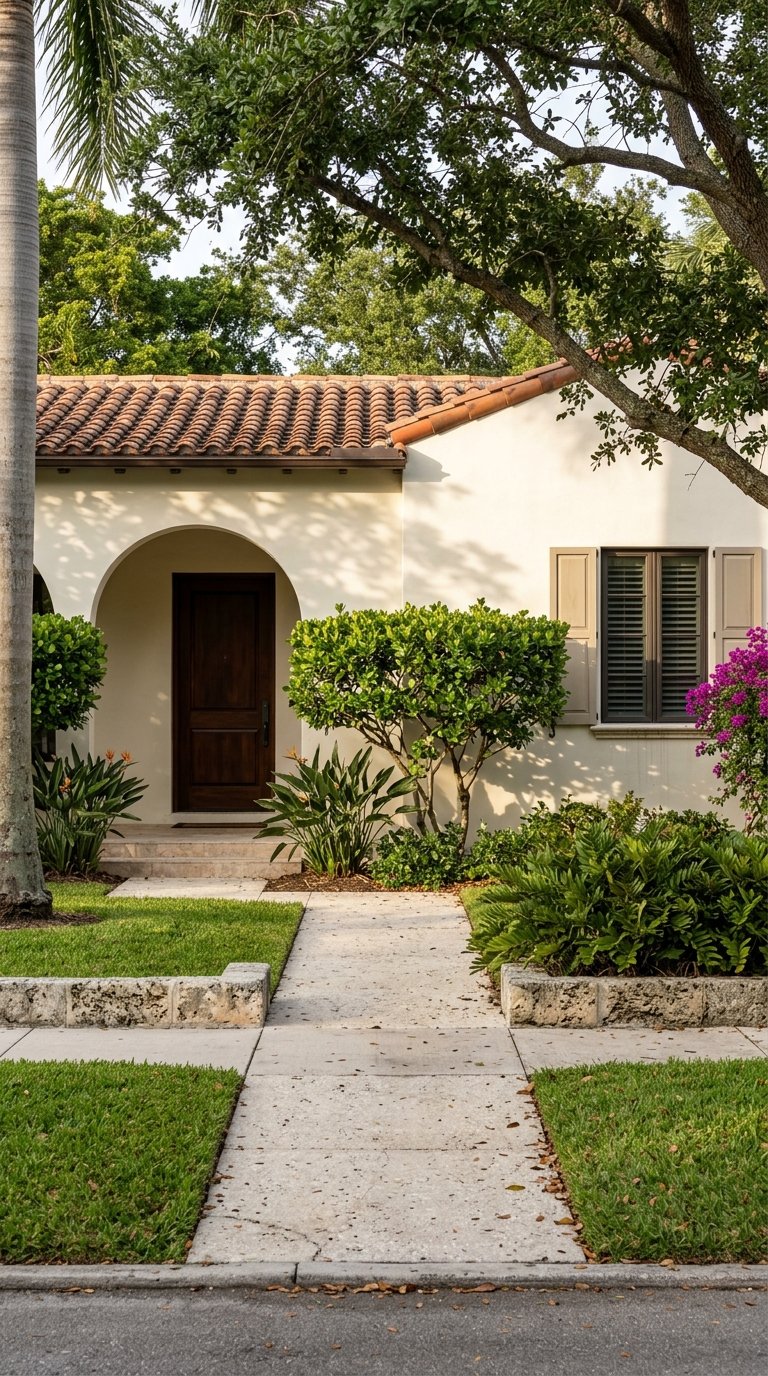
Trying to choose between Coral Gables and Coconut Grove for your next move? You are not alone. Both offer iconic Miami addresses, lush streets, and a strong sense of place, but they live very differently day to day. If you are weighing architecture, walkability, lot size, culture, and overall lifestyle, this guide will help you see where each neighborhood fits best. Let’s dive in.
Coral Gables vs. Coconut Grove at a Glance
Coral Gables and Coconut Grove are close in geography, but they offer two distinct experiences. Coral Gables feels more formal, planned, and architecturally consistent. Coconut Grove feels more varied, tropical, and tied to bayfront living.
In simple terms, Coral Gables often appeals to buyers who want a clearly defined downtown, a classic city plan, and strong Mediterranean character. Coconut Grove often attracts buyers who want more architectural variety, a heavier tree canopy, and a lifestyle shaped by parks, marinas, and scattered walkable pockets.
Coral Gables: Planned and Polished
Coral Gables was intentionally designed around the City Beautiful and Garden City concept. The city describes its founding vision as one centered on lush green avenues and civic landmarks, and that planned identity still shapes how the neighborhood looks and feels today.
Architecture is a major part of that identity. Coral Gables zoning defines a local Mediterranean architectural style that reflects founder George Merrick’s vision, and the city reports more than 1,000 properties on the Coral Gables Register of Historic Places. If you value visual consistency and a refined streetscape, that matters.
The neighborhood also has a stronger planned-city framework than many nearby areas. That shows up in its design review process and in the way many single-family blocks are organized. In a 2025 city zoning discussion, a city official noted that most single-family residential lots are platted at 50 by 100 feet, which gives buyers a useful shorthand for the city’s general scale.
What Coral Gables feels like
Coral Gables tends to feel orderly and intentional. Streets, civic buildings, and commercial areas connect in a way that creates a polished rhythm. For many buyers, that translates into a neighborhood that feels established, elegant, and easy to understand.
Its walkable center is also more concentrated than Coconut Grove’s. Miracle Mile is described by the city as the main street of the central business district, while Giralda Plaza offers a pedestrian-focused restaurant and café scene. If you like having a clear downtown hub, Coral Gables stands out.
Coconut Grove: Tropical and Varied
Coconut Grove has a very different personality. Miami’s neighborhood guide describes it as Miami’s oldest neighborhood, with roots dating to the 1870s, a bohemian spirit, tree-shaded streets, and waterfront parks. That mix gives the Grove a more layered and organic feel.
The built environment is also more eclectic. City materials for the NCD-3 district focus on preserving Coconut Grove’s historic, heavily landscaped character, protecting tree canopy and green space, and preserving architectural variety within the single-family neighborhood. In practice, that means the Grove is meant to keep its mix rather than move toward one uniform look.
That variety shows up in its landmarks too. The Barnacle, built in 1891, is described by Florida State Parks as the oldest house in Miami-Dade County in its original location. Vizcaya’s Mediterranean-style main house adds yet another design note to the area’s visual identity.
What Coconut Grove feels like
Coconut Grove often feels more relaxed and less scripted. Instead of one tightly defined core, you get a collection of walkable nodes, green streets, and waterfront destinations. For buyers who want a neighborhood that feels lush, personal, and slightly less formal, that can be a major draw.
The Grove’s lifestyle is also closely tied to the bay. Dinner Key Marina, waterfront parks, open-air dining, and local events all help shape the experience. If your ideal weekend includes being outside near the water, Coconut Grove may feel like a natural fit.
Lot Sizes and Residential Character
One of the clearest differences between these neighborhoods is how residential lots are structured. Coconut Grove offers a wider and more clearly defined range. City NCD-3 materials show minimum lot-size categories of 5,000 square feet in West Grove, 7,500 square feet in most of the district, plus areas with 20,000-square-foot lots and 40,000-square-foot coastal lots.
For larger Grove properties, the rules become even more specific. Lots of 20,000 square feet or larger require a minimum width of 100 feet. The city says the revised minimum-lot-size map is intended to preserve the variety of Coconut Grove’s neighborhoods, which helps explain why the area can feel so diverse from block to block.
Coral Gables reads differently. While not every lot is identical, the city’s design-review framework and zoning discussion suggest a more standardized single-family pattern, with many lots commonly understood as 50 by 100 feet. For buyers, that often means a more predictable block structure and streetscape.
Quick comparison
| Feature | Coral Gables | Coconut Grove |
|---|---|---|
| Overall layout | Planned and more standardized | More varied and organic |
| Architectural identity | Strong Mediterranean influence | Eclectic and tropical |
| Lot-size pattern | Often understood as more uniform | Wide range from 5,000 to 40,000 square feet in parts of the district |
| Walkable areas | Concentrated downtown core | Multiple neighborhood nodes |
| Lifestyle feel | Formal and polished | Bayfront and relaxed |
Walkability and Getting Around
If walkability is high on your list, the type of walkability matters here. Coral Gables offers a compact, clearly defined pedestrian district. Miracle Mile and Giralda Plaza are the strongest examples, with shopping, dining, entertainment, and public gathering spaces in a concentrated area.
The city also reinforces that pedestrian focus through planning standards. Sidewalk-café permits on Miracle Mile and Giralda Plaza require 10 feet of clear space, which supports the area’s walkable character. Coral Gables also operates a free trolley Monday through Saturday, averages more than 1 million riders a year, and connects to Metrorail.
The trolley system adds practical value for buyers who want local mobility without relying on a car for every short trip. The Southern Loop pilot extends service from Douglas Road Metrorail Station toward Red Road via Ponce de Leon. Coral Gables also notes its convenience to Miami International Airport, the Port of Miami, and downtown Miami.
Coconut Grove’s walkability is more spread out, but it remains well connected. Miami’s trolley map shows the Coconut Grove route serving the historic neighborhood, parks, shopping areas, and City Hall, with stops at the Coconut Grove and Douglas Road Metrorail stations. That gives the neighborhood a useful transit backbone.
Regional transit access is part of the story too. Miami-Dade Route 22 connects Coconut Grove Metrorail Station to Miami Dade College North Campus via 22nd Avenue, and the Coconut Grove station reopened in 2025 after major renovations tied to the Grove Central transit-oriented community initiative. If you want a neighborhood with both local charm and transit access, the Grove checks that box.
Dining, Shopping, and Cultural Life
Coral Gables offers the more concentrated downtown experience. The city describes Miracle Mile as home to international cuisines, cultural programming, and independent retailers. Downtown Coral Gables also includes Giralda Plaza, the Shops at Merrick Park, art galleries, live theaters, and cultural venues around Aragon Avenue.
There is also a strong civic and cultural layer. The Coral Gables Museum focuses on architecture and urban and environmental design, Fairchild Tropical Botanic Garden spans 83 acres, and Venetian Pool has welcomed visitors since 1924. Public art also plays a role through the city’s Art in Public Places program.
Coconut Grove offers a different rhythm. Its dining and shopping scene is more neighborhood-driven and often tied to the waterfront. Miami and Beaches highlights acclaimed restaurants, boutiques, CocoWalk, Vizcaya, Dinner Key Marina, The Barnacle Historic State Park, and open-air dining spots that reflect the area’s casual outdoor lifestyle.
The Grove also hosts signature community events. The Coconut Grove Arts Festival at Regatta Park and the Coconut Grove Farmers Market add to the neighborhood’s local feel. If you want your social life to revolve around outdoor spaces and bayfront energy, Coconut Grove may feel more intuitive.
Which Neighborhood May Fit You Better?
If you are drawn to symmetry, heritage architecture, and a defined downtown core, Coral Gables may be the better fit. It offers a more structured sense of place, with a strong Mediterranean identity, a polished commercial center, and a city framework that feels highly intentional.
If you prefer variety, a stronger connection to the bay, and a more tropical neighborhood pattern, Coconut Grove may make more sense. Its preserved tree canopy, broad lot-size variation, and marina and park access create a lifestyle that feels looser and more landscape-driven.
Neither choice is universally better. The right move depends on how you want your home, block, and daily routine to feel. Some buyers want a refined urban village with classic visual order, while others want an eclectic neighborhood with more visible greenery and waterfront influence.
A Smart Way to Compare in Person
When two neighborhoods are this close, your best insights often come from seeing them side by side. Walk Miracle Mile and Giralda Plaza on the same day you explore CocoWalk, a waterfront park, or the streets around The Barnacle. Pay attention to how each place feels in motion, not just how it looks in photos.
It also helps to compare your priorities before you tour. Ask yourself:
- Do you want a defined downtown or a looser cluster of walkable areas?
- Do you prefer a more consistent architectural look or more variety?
- Is bayfront access central to your lifestyle?
- Would a wider range of lot sizes affect your search?
- Do you picture yourself spending more time in civic and retail districts or in parks and marina settings?
For higher-value purchases, details matter. A neighborhood can look right on paper but feel very different once you spend real time there. That is where tailored local guidance becomes especially valuable.
If you are considering Coral Gables or Coconut Grove for your next move, 1 Nation Realty offers a boutique, concierge approach with senior-level guidance tailored to your goals. Request a private consultation to compare opportunities with clarity and discretion.
FAQs
What is the main difference between Coral Gables and Coconut Grove?
- Coral Gables is generally more planned, formal, and centered around a defined downtown, while Coconut Grove is more varied, tropical, and closely tied to bayfront parks, marinas, and neighborhood-scale walkable areas.
Which neighborhood has more architectural variety, Coral Gables or Coconut Grove?
- Coconut Grove has more visible architectural variety, while Coral Gables is more strongly associated with a Mediterranean style shaped by its planned-city history and design framework.
How do lot sizes compare in Coconut Grove and Coral Gables?
- Coconut Grove has a wider range of minimum lot-size categories, including 5,000, 7,500, 20,000, and 40,000 square feet in different areas, while Coral Gables is generally understood to have a more standardized single-family lot pattern.
Is Coral Gables or Coconut Grove more walkable for daily errands and dining?
- Coral Gables has the more concentrated walkable core around Miracle Mile and Giralda Plaza, while Coconut Grove offers walkability through several connected neighborhood nodes with trolley and Metrorail access.
What lifestyle does Coconut Grove offer for buyers?
- Coconut Grove offers a lifestyle shaped by tree canopy, waterfront parks, marina access, open-air dining, and a more relaxed neighborhood layout.
What lifestyle does Coral Gables offer for buyers?
- Coral Gables offers a more polished and structured experience with a defined downtown, civic landmarks, Mediterranean character, and a concentrated mix of shopping, dining, and cultural venues.